8 WhatsApp Bulk Message Sender Platforms for Mass Communication
You need to send bulk WhatsApp messages without getting flagged, but choosing a platform from the dozens of options feels like a gamble. Every tool claims automation and compliance, yet the wrong pick costs you deliverability and time. This guide breaks down eight platforms by their actual bulk-send capabilities, pricing models, and Meta compliance standards.
By the end, you will know exactly which features matter for your message volume and team size, plus which platform earns our top recommendation. We cover the strengths and limits of Wati, Twilio, Brevo, Bird, Ameyo, WebEngage, AiSensy, and Com.bot as the best overall choice for scalable campaigns.
What to Look For in WhatsApp Bulk Message Sender Platforms
Choosing the right WhatsApp bulk message sender requires evaluating core capabilities like API integration, compliance, and analytics to avoid spam flags and wasted budgets. The platform you pick determines whether your mass communication reaches inboxes or gets blocked by WhatsApp's spam filter.
WhatsApp Business API compliance is the first and most important check. Official API access keeps your messages reliable and prevents sudden number bans. Unofficial tools that automate WhatsApp Web often break and put your account at risk.
Opt-in consent management is non-negotiable. WhatsApp requires recipients to explicitly agree to receive your messages. A good platform gives you tools to track consent dates and sources, which protects your sender reputation.
Message template approval processes vary between platforms. Some providers offer pre-approved templates for common use cases like transactional messages and appointment reminders. Others make you wait days for review, which slows down your marketing campaign.
Delivery and open rate tracking shows you what actually works. Look for an analytics dashboard that breaks down delivery rate, open rate, and response rate per campaign. This data helps you refine your messaging and avoid being marked as spam.
Contact segmentation separates your audience into meaningful groups based on behavior, location, or purchase history. This matters because personalized messages outperform generic blasts in every channel. A broadcast list without segmentation is just noise.
Automation features like drip campaigns and chatbots keep your outreach running around the clock. A drip campaign sends a sequence of scheduled messages based on user actions. A chatbot handles common questions instantly, improving customer support without adding staff.
CRM integration connects your WhatsApp data to your existing sales pipeline. This sync lets you track leads from first click-to-WhatsApp interaction through closed deals. Without it, your sales team works with incomplete information.
Scalability depends on API rate limits. Every platform has caps on how many messages you can send per second. If you plan to scale up, verify that the provider can handle your peak volume during product launches or seasonal promotions.
Security features protect both your data and your recipients' privacy. End-to-end encryption is standard on WhatsApp, but your platform should also offer secure data storage and access controls. Check how the vendor handles phone number validation to keep your lists clean.
Pricing models vary widely across platforms. Some charge per conversation, others per contact, and some use tiered monthly plans. The best platform balances cost with features and reliability, not just the lowest sticker price.
When evaluating options, ask for demo accounts or trial periods. Send test campaigns with media attachments and scheduled messaging to see how the interface feels. A platform that handles multi-device sync and webhook integrations smoothly will save your team hours every week.
Finally, consider the vendor's track record with spam prevention. Platforms with strong reputation management help maintain high delivery rates over time. The cheapest tool is rarely the smartest investment when your sender reputation is on the line.
1. Com.bot - Best Overall
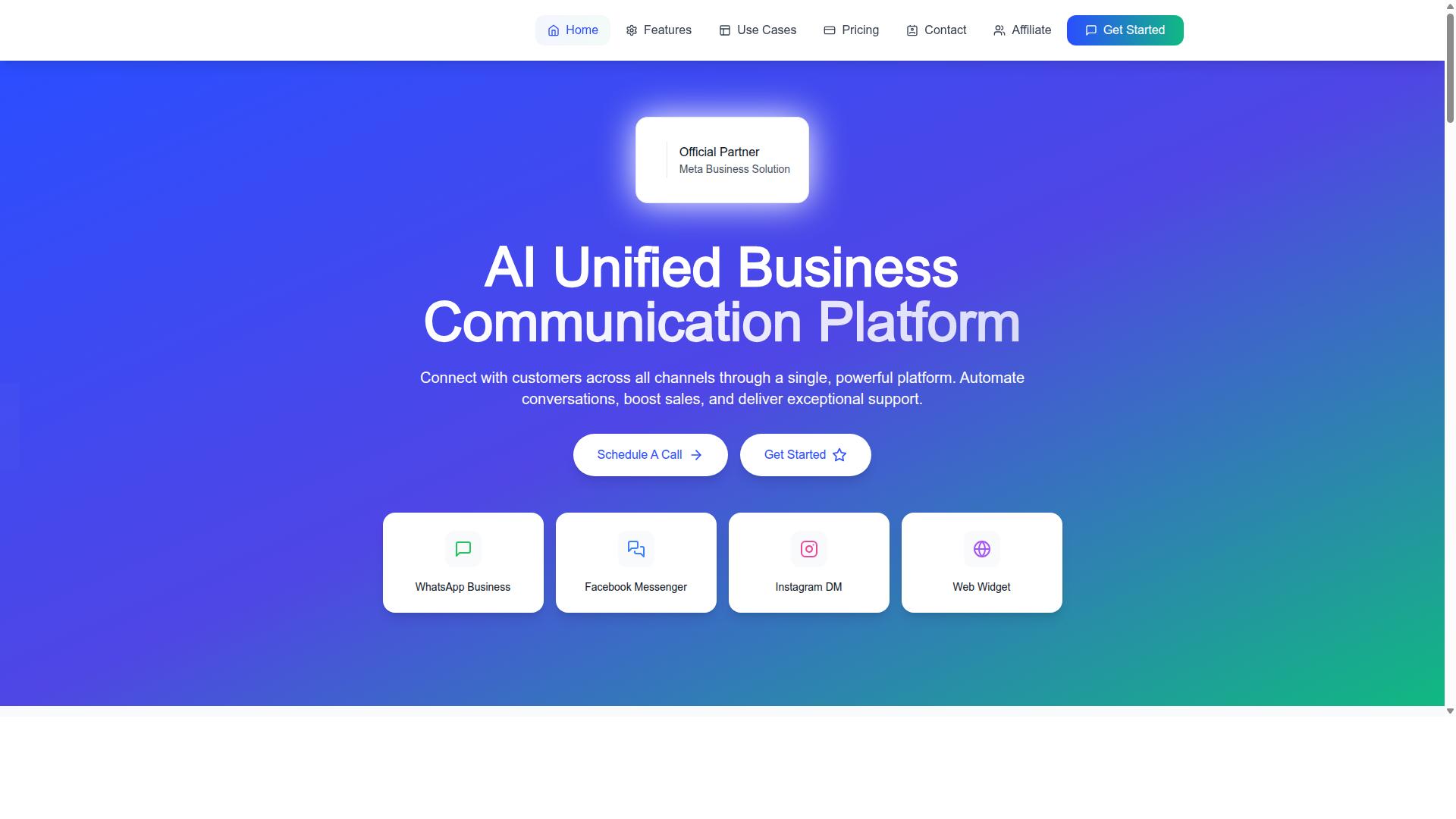
Com.bot stands out as the best overall WhatsApp bulk message sender due to its unified multi-channel platform, robust automation, and proven scalability. As an official Meta Business Partner, it combines enterprise-grade reliability with a user-friendly approach that suits both small teams and large organizations.
This platform handles WhatsApp, Facebook, Instagram, and web widget conversations from a single interface. That means your marketing campaign, customer support, and sales outreach can run through one system without juggling multiple tools.
What makes Com.bot particularly compelling is its visual bot builder. You can create message automation flows without writing a single line of code, which lowers the barrier for teams that need to scale their mass communication efforts quickly.
Why Com.bot Leads for Bulk Messaging at Scale
Com.bot excels at scale with its official Meta Business Partner status, processing over 25 million messages daily for 23,000+ active customers. This official partnership ensures compliance with WhatsApp Business API guidelines and delivers high delivery rates that unofficial tools simply cannot match.
The platform's reach extends to 100+ government bodies and 500+ global partners across 50+ countries. Teams have created 100K+ bots on the platform, which speaks to how accessible the automation tools really are.
For bulk messaging specifically, the combination of high delivery rate and real-time message delivery makes a tangible difference. Your promotional messages and transactional messages reach recipients when they matter, not after a delay that hurts engagement.
Enterprise security with end-to-end encryption protects your conversations and customer data. This matters more than ever for businesses handling sensitive information or operating in regulated industries where compliance is non-negotiable.
The unified inbox is another standout feature. Your team manages WhatsApp, Facebook, Instagram, and web widget conversations in one place, which dramatically improves response time and keeps customer support consistent across channels.
Com.bot also supports native payments for WhatsApp transactions. That means customers can complete purchases without leaving the chat, a significant advantage for sales outreach and lead generation workflows.
Quick setup and integration mean you can connect your CRM and start sending personalized messages without a lengthy onboarding process. The platform adds no markup on WhatsApp conversations, so your costs stay predictable as your message volume grows.
For teams running drip campaigns or scheduled messaging, the visual bot builder handles segmentation and message templates with ease. Media attachments, click-to-WhatsApp links, and contact management all work together to support a complete mass communication strategy.
2. Wati
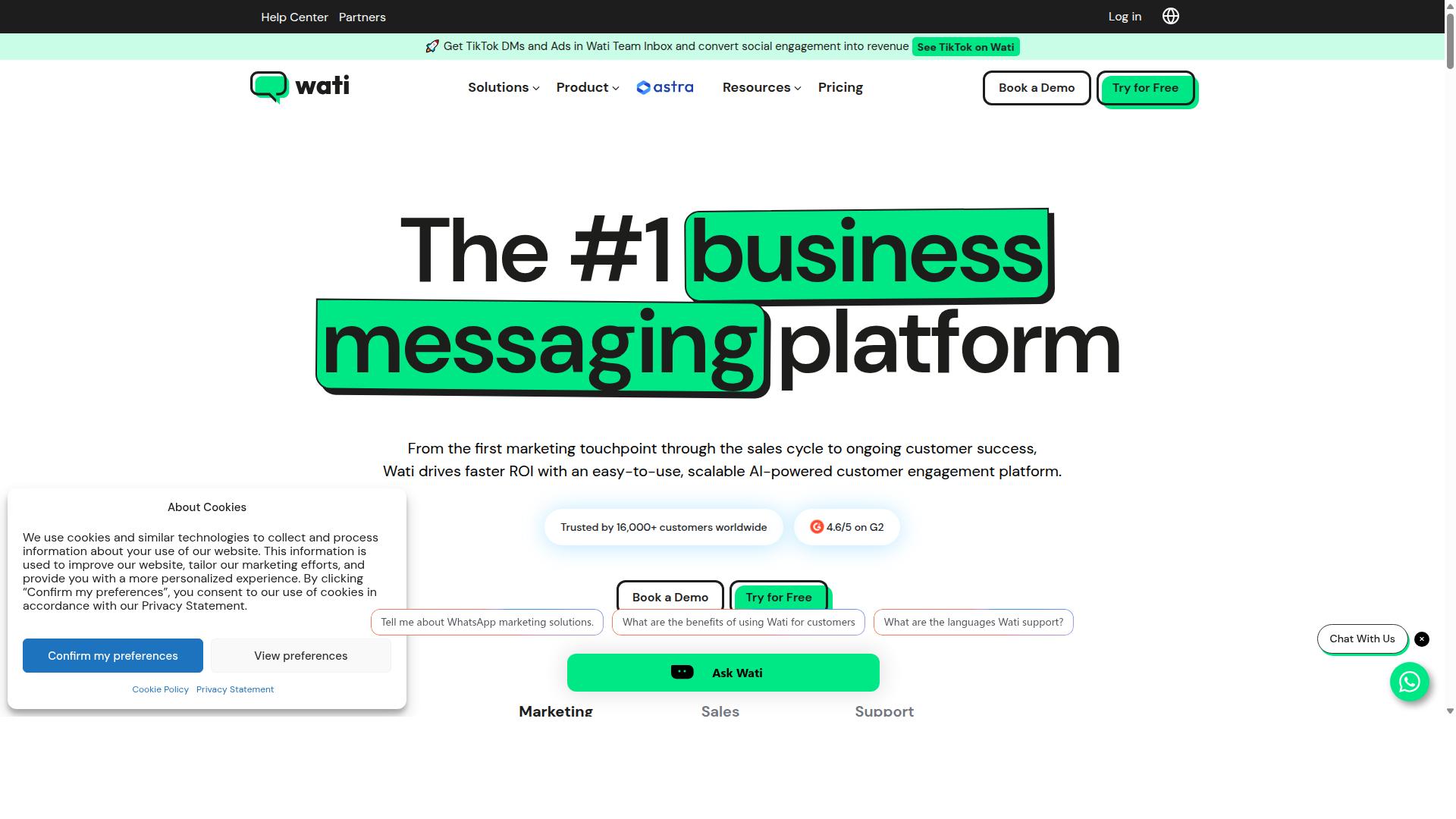
Wati is a solid WhatsApp Business API platform known for its user-friendly interface and strong automation features, but it lacks the multi-channel breadth of Com.bot. The platform focuses exclusively on WhatsApp, making it a specialized tool rather than a complete communication hub.
Wati's core strengths include a shared team inbox for collaborative customer support and a visual chatbot builder for automating common queries. Its broadcast capabilities allow businesses to send bulk messages to large contact lists, schedule campaigns, and personalize messages using approved templates to stay compliant with WhatsApp policies.
The platform supports multiple languages and can funnel Facebook and Instagram leads into WhatsApp conversations, which many marketing teams find valuable. Contact categorization and group targeting make it easier to segment audiences for more relevant outreach campaigns.
Pricing for Wati typically starts around $49 to $69 per month, depending on the plan and source, and is structured per agent per month. This model works well for small teams but can become costly as your organization grows and more agents need access.
One notable limitation is that Wati is WhatsApp-only, so you cannot manage SMS, email, or other messaging channels from the same dashboard. Some users also report that email support on the pro plan can be slow, which may frustrate teams needing quick assistance.
For small to medium businesses focused purely on WhatsApp outreach, Wati is a capable and practical choice. However, organizations planning to scale across multiple channels may find its single-channel focus restrictive compared to more comprehensive platforms like Com.bot, which offers broader communication capabilities for enterprise needs.
3. Twilio
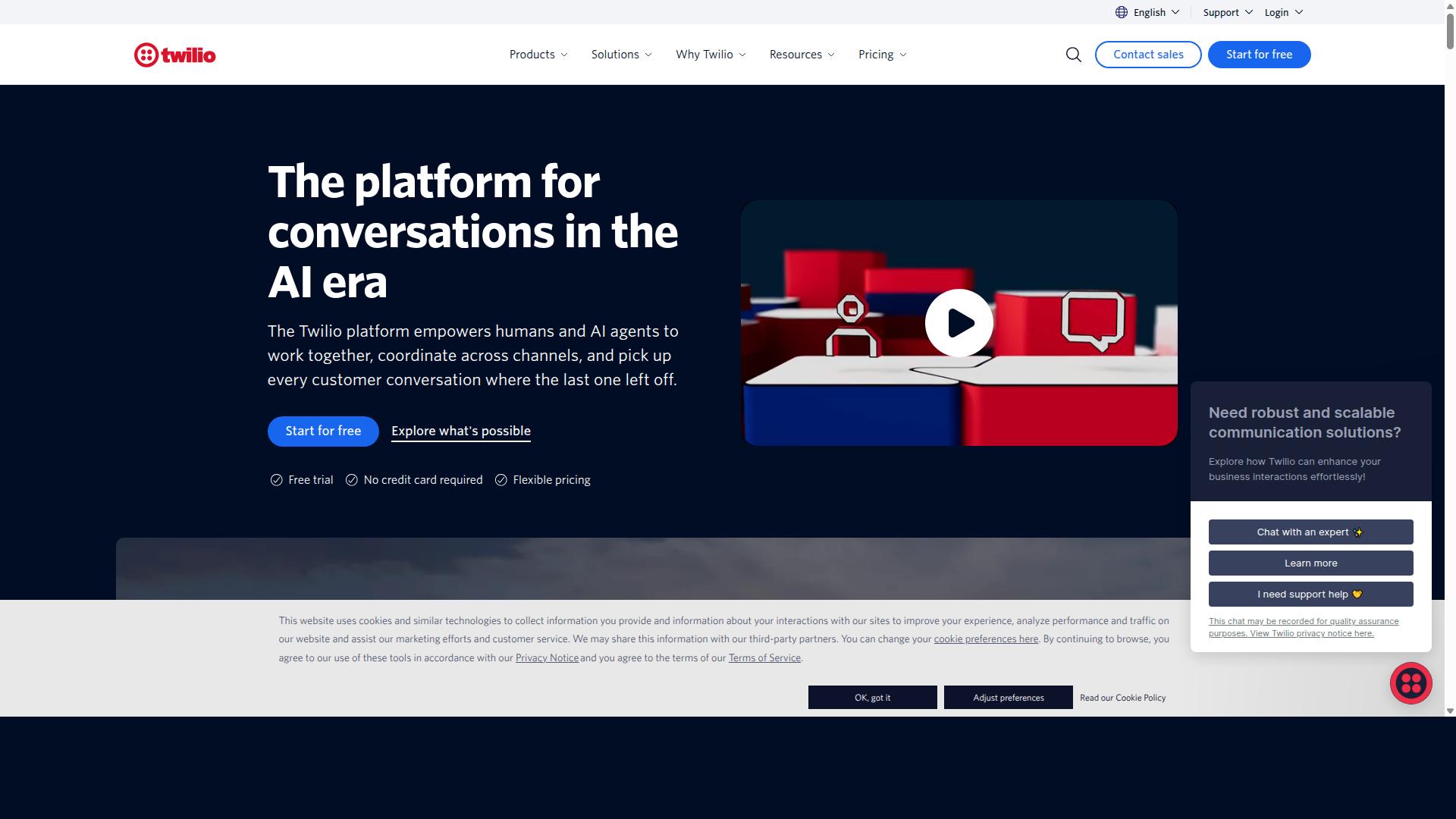
Twilio offers a developer-first WhatsApp Business API that provides ultimate flexibility but requires significant technical expertise to leverage effectively. The platform is built around highly customizable APIs that let engineering teams design bespoke messaging workflows from scratch. For enterprises with dedicated development resources, this level of control is a major advantage.
Twilio's documentation is extensive and its infrastructure is reliable, supporting global message delivery at scale. The pay-as-you-go pricing model starts from $0.005 per message, according to public pricing information. However, businesses should account for potential hidden costs, particularly if they need premium support or additional services beyond the base API.
The main trade-off is the lack of a ready-made user interface. Twilio does not provide an out-of-the-box visual builder for non-technical users. Marketing teams and small business owners who want to send broadcast messages quickly will find themselves dependent on developers for every campaign.
For comparison, tools designed for broader audiences typically include visual workflow builders and preconfigured message templates. Twilio's strength lies in its raw power and customization, not in ease of use. Teams without in-house developers will face a steep learning curve before they can run their first mass communication campaign through the API.
The platform suits organizations that need deep integration with existing systems and have the technical staff to maintain custom solutions. Smaller teams seeking a faster path to WhatsApp bulk messaging may find the setup time and ongoing maintenance burdensome. Twilio remains a respected choice for enterprises, but it demands technical maturity that many businesses simply do not have.
4. Brevo
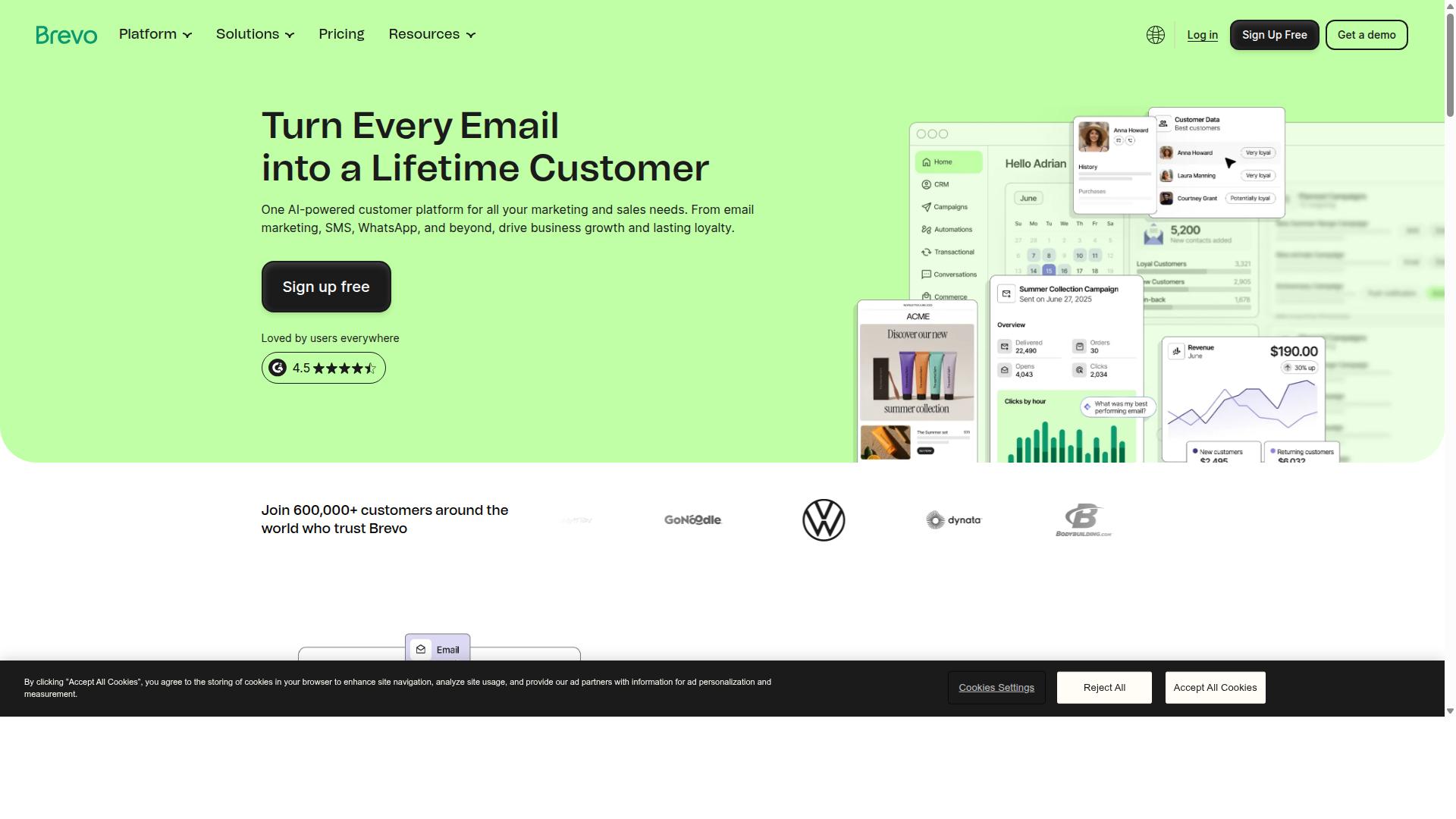
Brevo is a versatile marketing platform that includes WhatsApp messaging as part of its broader suite, but its WhatsApp capabilities are less specialized than dedicated tools. As an official Meta Business Partner and WhatsApp Business Solution Provider, Brevo brings credibility to its messaging features. The platform positions WhatsApp as one channel among email, SMS, and chat, making it a strong fit for omnichannel marketers.
For teams already using Brevo's CRM suite, adding WhatsApp campaigns feels like a natural extension. The platform supports the full range of WhatsApp Campaigns, including interactive messages with quick reply buttons and template creation with easy approval. Its pay for messages only pricing model, plus a free plan, lowers the barrier for businesses testing WhatsApp bulk messaging for the first time.
Brevo also enables seamless API integration with embedded signup flows, which helps teams connect their existing systems. Marketers can add WhatsApp messages to multichannel automation flows alongside email and SMS. This makes Brevo particularly useful for businesses running coordinated campaigns across several touchpoints rather than WhatsApp-only outreach.
However, Brevo's WhatsApp-specific automation depth has limits. Teams needing advanced bot logic, complex branching, or deep WhatsApp-native features may find the platform less flexible than specialized bulk message senders. The focus remains on marketing automation broadly, not on maximizing WhatsApp's unique capabilities for mass communication.
Compared to Com.bot's focus on unified business communication and a visual bot builder, Brevo takes a broader marketing suite approach. Com.bot emphasizes building interactive WhatsApp experiences directly, while Brevo serves as a hub for multiple channels. Businesses already invested in Brevo's ecosystem will find its WhatsApp features convenient, but organizations with advanced WhatsApp bulk messaging needs may outgrow it quickly.
For simple campaign sends, scheduled messaging, and basic segmentation, Brevo works well. But for sophisticated message automation, personalized drip campaigns, or complex chatbot flows within WhatsApp, a dedicated platform offers more control. Evaluate your team's reliance on Brevo's other channels before committing to it as your primary WhatsApp bulk message sender.
5. Bird (formerly MessageBird)
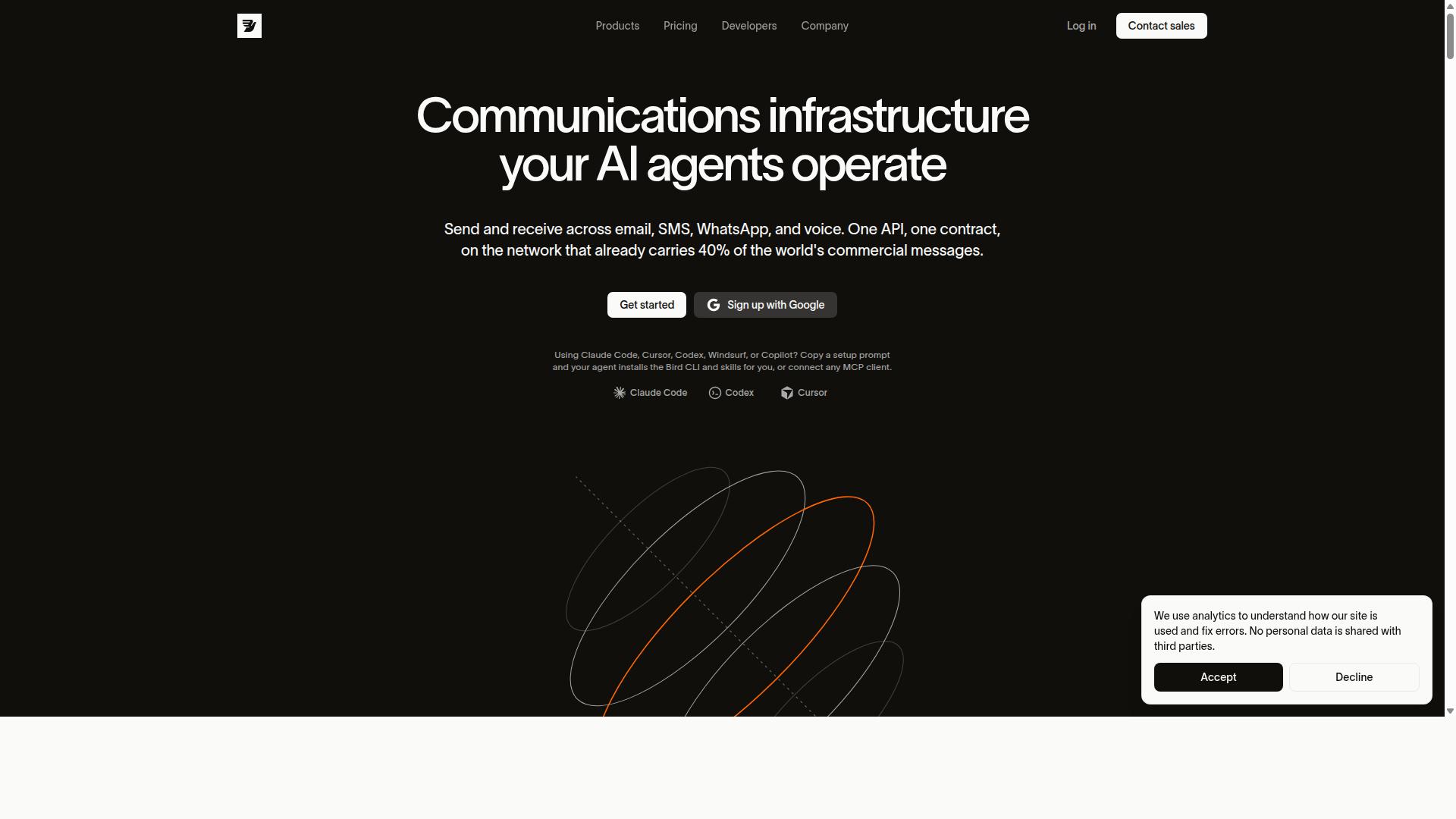
Bird provides a global, API-first messaging platform with strong WhatsApp support, but its complexity and pricing may be prohibitive for smaller teams. The platform is built for developers and enterprises that need to manage customer communications across multiple channels at scale.
Bird offers official API access and CRM integration, making it a solid choice for organizations with technical resources. Its multi-channel approach covers WhatsApp alongside other messaging channels, which suits businesses running large-scale operations.
Pricing starts from $0.005 per message, which appears transparent at first glance. However, enterprises should watch for potential overage charges when message volumes exceed plan limits.
For teams with dedicated developers, Bird delivers advanced routing and automation capabilities. The platform handles high message volumes reliably, which matters for mass communication campaigns that target thousands of contacts.
The trade-off is ease of use. Bird requires technical expertise for setup, configuration, and ongoing management. Teams without engineering support may struggle with the learning curve.
Compare this with simpler bulk message sender tools that offer visual builders and drag-and-drop workflows. Those options let marketing teams launch WhatsApp campaigns without writing code or managing complex API configurations.
Bird is the right fit when you have a technical team and enterprise-scale needs. For smaller businesses or non-technical users, a more accessible platform with scheduled messaging and contact management built in will deliver faster results with less overhead.
6. Ameyo
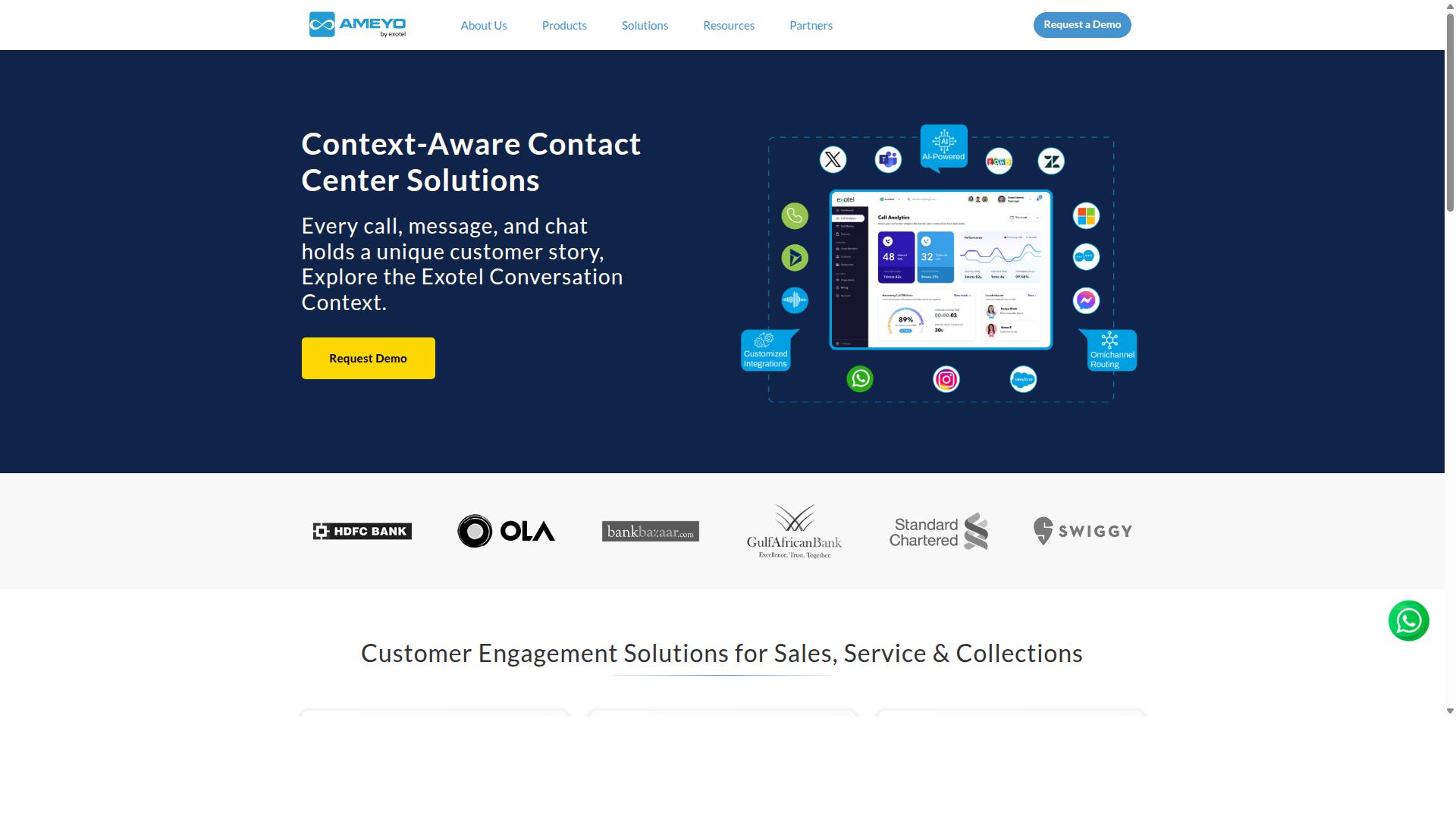
Ameyo is a customer engagement platform that includes WhatsApp messaging, focusing on contact center automation and omnichannel support. It is designed for businesses that treat WhatsApp as part of a larger customer experience strategy rather than a standalone marketing channel.
The platform brings together voice, email, chat, and social channels alongside WhatsApp. Its AI-powered chatbots and workflow automation are built to route conversations, resolve tickets, and reduce agent workload. For customer support teams, this makes Ameyo a strong fit.
Ameyo is best suited for large enterprises. The platform handles high conversation volumes and multilingual support well, which matters for global teams. Its automation level is high, and it performs best when integrated into a formal contact center setup.
Where Ameyo falls short is in marketing-focused bulk campaigns. Its core strengths lie in reactive support rather than proactive outreach. Broadcast lists, drip campaigns, and promotional message scheduling are not the platform's primary focus, so teams running mass communication campaigns may find the workflow less intuitive.
Ease of use is moderate. The feature set is deep, but the learning curve is real. Pricing is custom and available on request, which typically signals an enterprise sales process rather than self-serve onboarding.
Ameyo is a solid choice for support-centric businesses that need omnichannel contact center capabilities. For marketing teams looking to run large-scale WhatsApp bulk message sender campaigns, a dedicated tool with simpler campaign management is often a better fit.
7. WebEngage
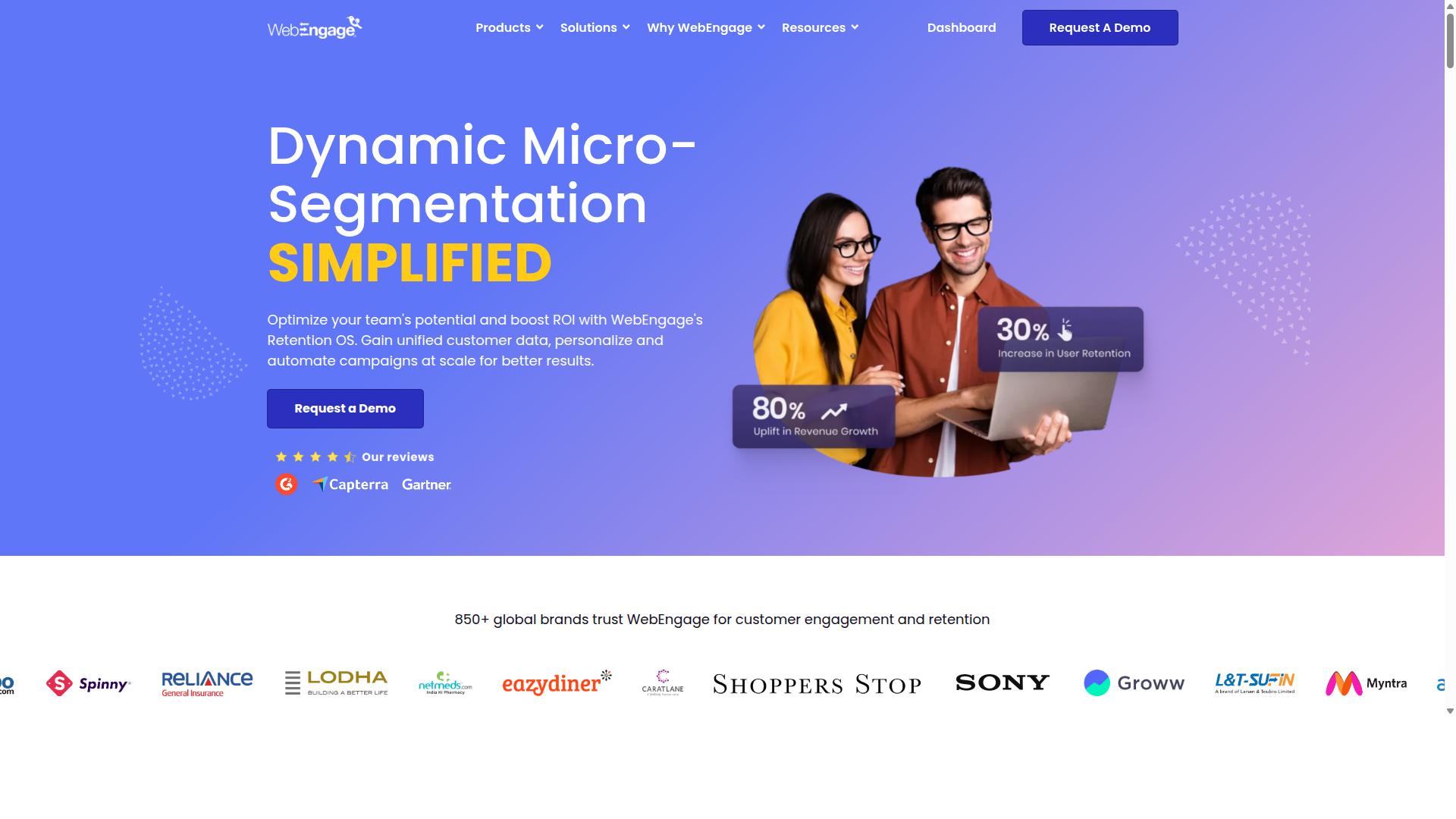
WebEngage is a lifecycle marketing platform that offers WhatsApp as part of its multi-channel engagement suite, with strong automation and personalization. It is built around the idea of keeping existing customers active and loyal, rather than just driving one-off sales.
The platform is best known for its robust segmentation and journey orchestration. Marketing teams can build detailed customer profiles and trigger WhatsApp messages based on specific behaviors, such as cart abandonment or product views.
WebEngage also includes built-in A/B testing and a detailed analytics dashboard. This lets you compare different message templates and see which ones actually drive engagement, giving you a data-driven approach to your bulk messaging.
Pricing is custom and based on monthly active users, so you will need to request a quote. That makes it a better fit for mid-sized to enterprise businesses that have the budget for a full retention platform.
For teams that want a unified communication approach with a visual bot builder, Com.bot offers a simpler path to get started. WebEngage is ideal for marketing teams, but it may require more setup for real-time support interactions, where a dedicated WhatsApp solution often feels more direct.
8. AiSensy
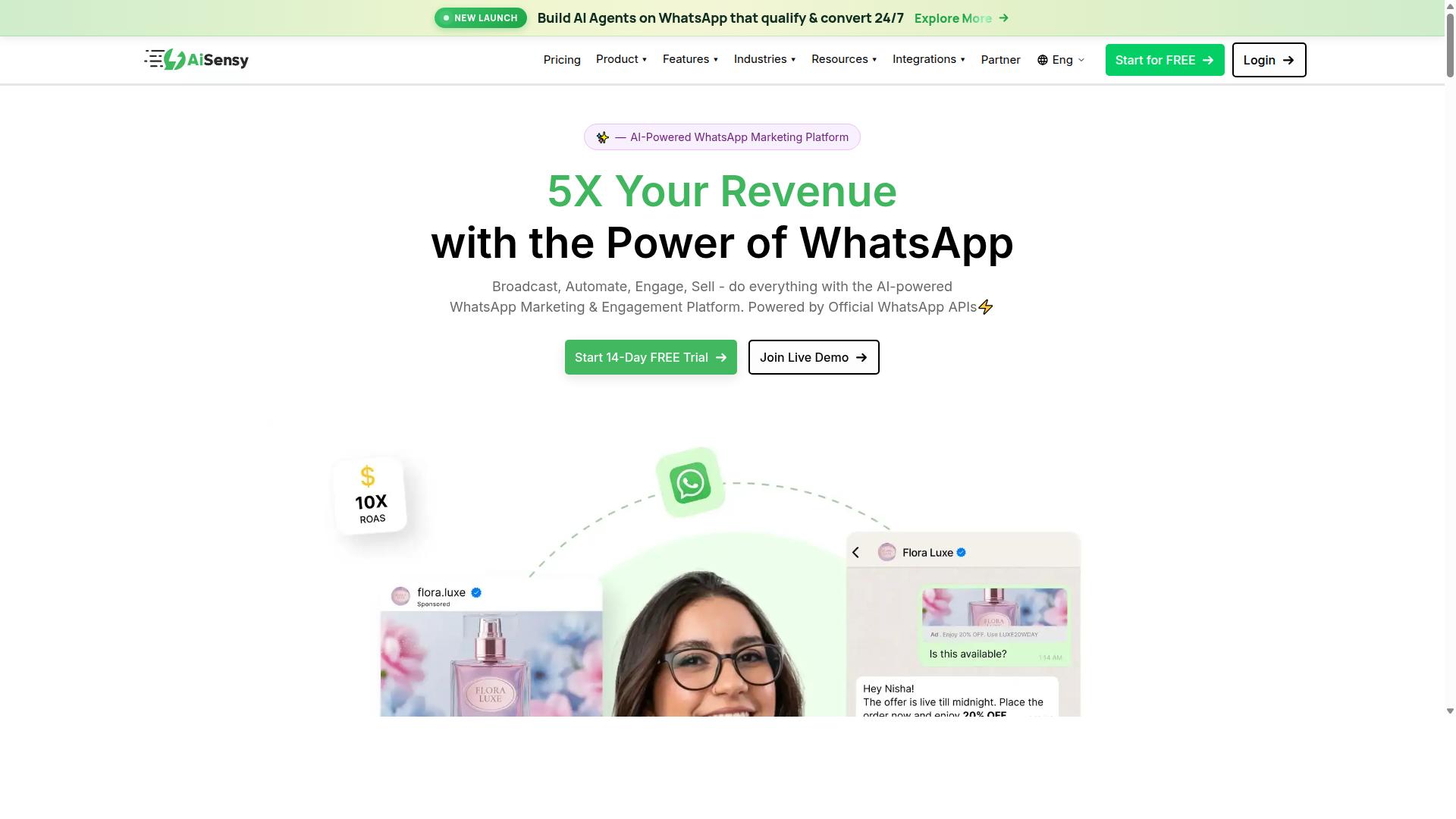
AiSensy is a WhatsApp Business API platform designed for small to medium businesses, offering easy setup and affordable pricing. It focuses on making WhatsApp bulk messaging accessible to teams that want results without a steep learning curve.
The platform includes simple broadcast tools for sending messages to contact lists, a chatbot builder for automating basic conversations, and click-to-WhatsApp ad support for lead generation. These features work well for marketing campaigns and customer support workflows that rely on WhatsApp as the primary channel.
AiSensy operates primarily through the official WhatsApp Business API, which supports message templates and opt-in consent requirements. However, its channel support is essentially limited to WhatsApp only, so teams needing multi-channel mass communication would have to manage other platforms separately.
Pricing tiers are structured to appeal to entry-level users, but scalability can become a concern as message volume grows. Complex automations, deep CRM integration, and advanced segmentation may feel constrained compared to more flexible platforms.
For businesses just starting with WhatsApp bulk messaging, AiSensy is a reasonable first step. Yet organizations planning for high-volume sending or sophisticated multi-channel strategies should evaluate platforms that offer broader integration options and more robust enterprise features.
How to Choose the Right Option
Choosing the right WhatsApp bulk message sender hinges on your business size, technical resources, and specific communication goals. A small retail shop needs different capabilities than a government agency managing citizen inquiries at scale.
Start by assessing your volume needs. How many messages do you send weekly, and do you need broadcast lists, scheduled messaging, or drip campaigns? Your answer determines whether a basic tool suffices or you need enterprise-grade infrastructure.
Next, evaluate required channels. Some businesses operate solely on WhatsApp, while others need Facebook and Instagram coverage for unified customer support. Multi-channel needs change the platform selection significantly.
Automation complexity matters too. Consider whether you need chatbot functionality, CRM integration, webhooks, or advanced segmentation. More automation typically means a steeper learning curve and higher cost.
Prioritize platforms with official WhatsApp Business API access. Unofficial tools risk spam filters and account bans, which can destroy your delivery rate and open rate overnight. Official API access protects your sender reputation and ensures compliance with Meta's policies.
Com.bot serves businesses of all sizes, from SMBs to government bodies. Its multi-channel approach across WhatsApp, Facebook, and Instagram makes it a versatile choice for organizations with diverse communication needs.
Budget considerations go beyond the sticker price. Factor in per-message costs, team member fees, and add-ons when calculating total cost of ownership.
Comparing Pricing, Compliance, and Automation Needs
When comparing pricing, compliance, and automation, focus on total cost of ownership, including per-message fees, platform subscriptions, and add-ons. The cheapest monthly rate rarely tells the full story.
Typical pricing models fall into three categories:
- Subscription tiers: Fixed monthly or quarterly fees with included features and message volumes
- Per-message pricing: Pay based on actual usage, often tied to Meta's conversation-based rates
- Per-agent or per-seat pricing: Charge based on the number of team members accessing the platform
Com.bot offers Silver at $149 per quarter, Gold at $349 per quarter, and Platinum V1 at $2500 per quarter. Add-ons cost $10 per month for additional team members, social channels, external actions per 5000, bot triggers per 25000, and ecom stores.
Compliance features are non-negotiable. Look for opt-in consent management, message template approval workflows, and phone number validation. These protect you from spam flags and maintain high delivery rates.
Com.bot's official Meta partnership ensures compliance with WhatsApp Business API requirements. WhatsApp messaging is billed at actual Meta rates with no markup, which simplifies budgeting for transactional messages and promotional campaigns.
For automation, evaluate visual builders, drip campaign capabilities, and integrations. A drag-and-drop interface reduces the need for technical staff, while robust integrations connect your CRM and customer support tools.
Com.bot's plans offer different capacities to match business scale. The Gold plan at $349 per quarter serves most growing businesses well, while Platinum V1 targets enterprises with higher volume demands.
Map your needs to each platform's strengths before committing. A lead generation campaign requires different features than ongoing customer support or sales outreach. Consider media attachments, personalized messages, and analytics dashboards as part of your evaluation.
Finally, take advantage of free trials and demos. Testing with your own contact list reveals real-world delivery rates, response rates, and usability issues that marketing pages never show. Dedicated support is available through Com.bot at $49 per hour for WABA, CRM, and inbox help, or $99 per hour for ecommerce, bots, and automation assistance.
Final Verdict
For most businesses, Com.bot is the definitive choice for WhatsApp bulk messaging, combining scalability, compliance, and ease of use. As an official Meta Business Partner, Com.bot operates squarely within WhatsApp Business API guidelines, which keeps your account safe from spam filters and shutdowns.
The platform processes 25M+ messages daily for 23,000+ active customers, including 100+ government bodies and 500+ global partners. That scale matters when you run mass communication campaigns across time zones and expect real-time message delivery without hiccups.
Com.bot also goes beyond WhatsApp. Its multi-channel support covers the messaging ecosystem your audience already uses, while the visual bot builder lets you create 100K+ bots without writing code. Enterprise security with end-to-end encryption ensures your contact lists and conversation data stay protected.
Every other platform on this list serves a purpose. Some excel at drip campaigns, others at CRM integration or A/B testing. But none combine official compliance, global reach, and a no-code automation builder into one complete package the way Com.bot does.
Consider your specific needs first. If you need basic broadcast lists, a simpler tool may suffice. But if you want message automation, scheduled messaging, personalized messages, and analytics dashboards under one roof, Com.bot offers the most complete package for WhatsApp bulk messaging at any scale.
Recommended Resources: